
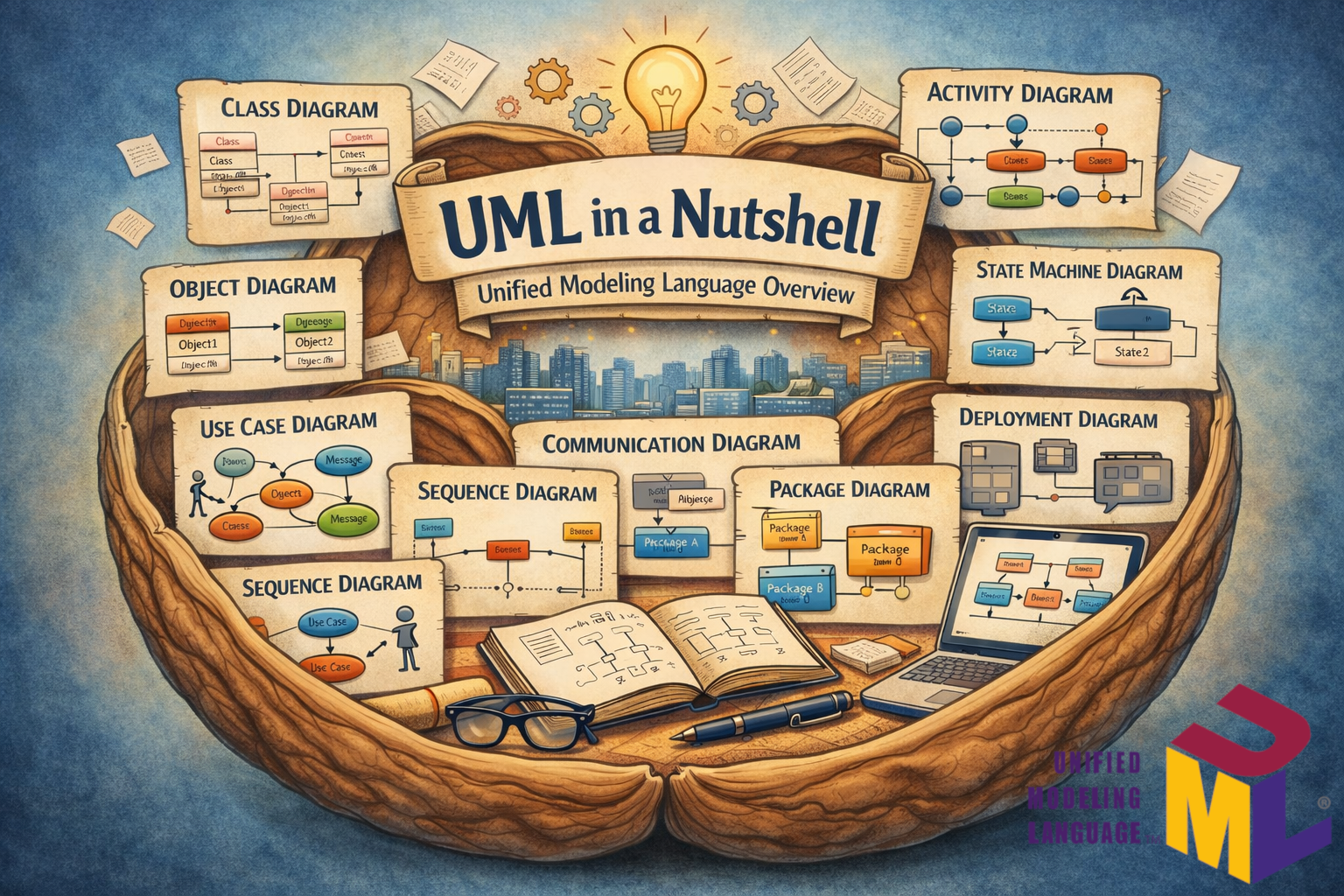
UML in a Nutshell provides a concise overview of all UML diagram types and their typical areas of application.
The course introduces the purpose of each diagram, explains the most important concepts, and shows how the diagrams relate to one another.
It is designed to give learners the big picture of UML and help them understand which diagram to use for a particular modelling task—without going into detailed notation rules or advanced modelling techniques.
- Teacher: Admin Dr. Horst Kargl
- Teacher: Bianca Pilz
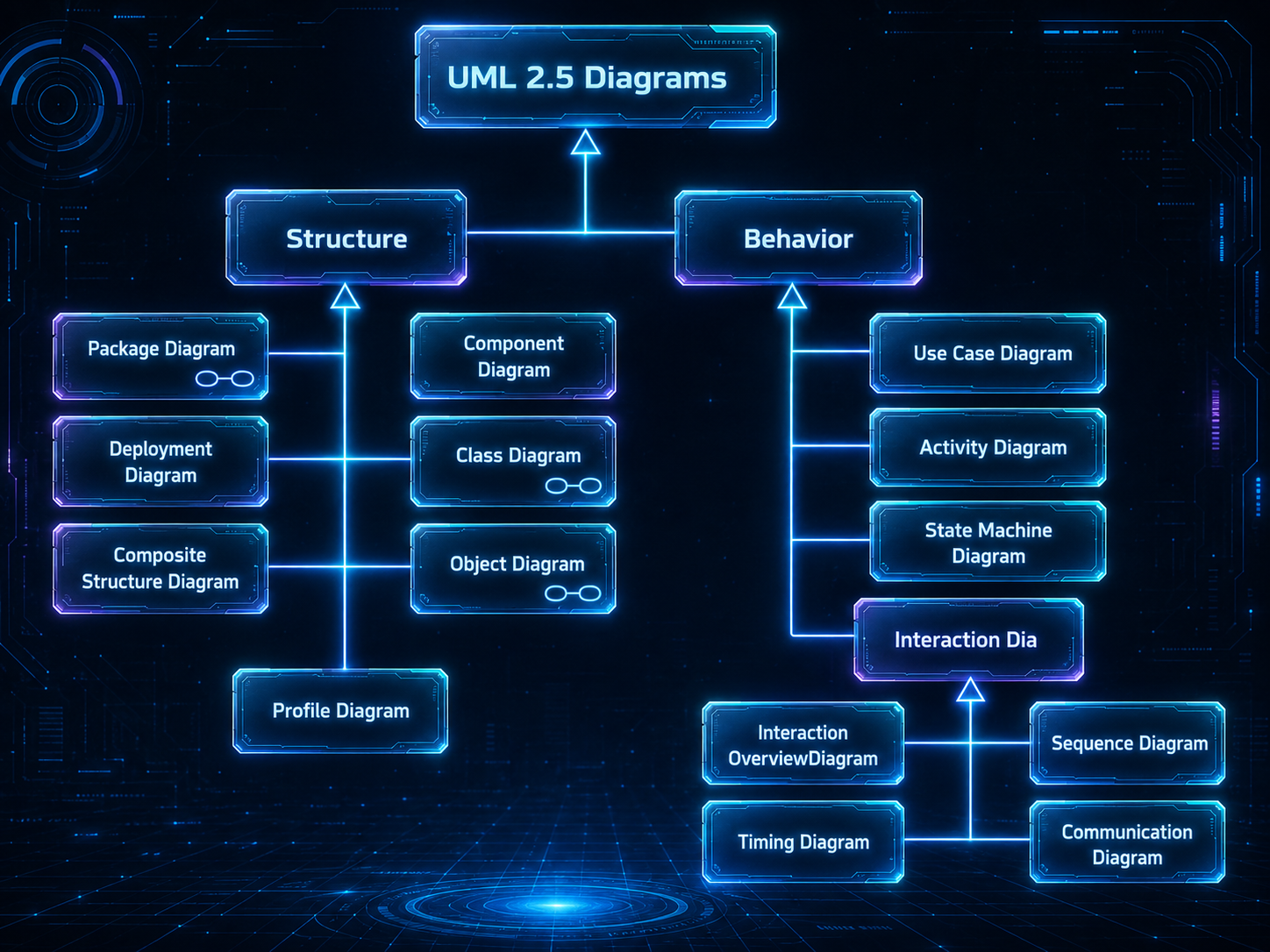
This course serves as a comprehensive introduction to the Unified Modeling Language (UML), equipping participants with a clear understanding of its concepts and practical applications in software development and how UML can be used in other domains.
The focus of this course is on providing a broad overview of various UML diagrams and their specific roles and purpose and for what problem each of the UML diagrams can bes used.
After this course you will know the different types of UML diagrams and what they can be used for. You will be able to decide which type of diagram is better suited to which problem.
This course is not a complete introduction to UML. There are more advanced courses for this.
A Model-Based Software Development (MBSD) course with UML and Enterprise Architect teaches participants how to design and build software systems using models as the primary artifacts. The course covers essential UML diagrams (such as use case, class, sequence, and state machine diagrams) and shows how to apply them effectively throughout the development lifecycle. Using Sparx Enterprise Architect, learners practice creating, managing, and validating models, generating documentation, and linking requirements to design and implementation. The course emphasizes improving software quality, consistency, and maintainability through structured modeling and tool-supported workflows.

How to add a diagram, element, copy an element, etc.
With diagram specific handlings as shown in trainings.
What you will learn
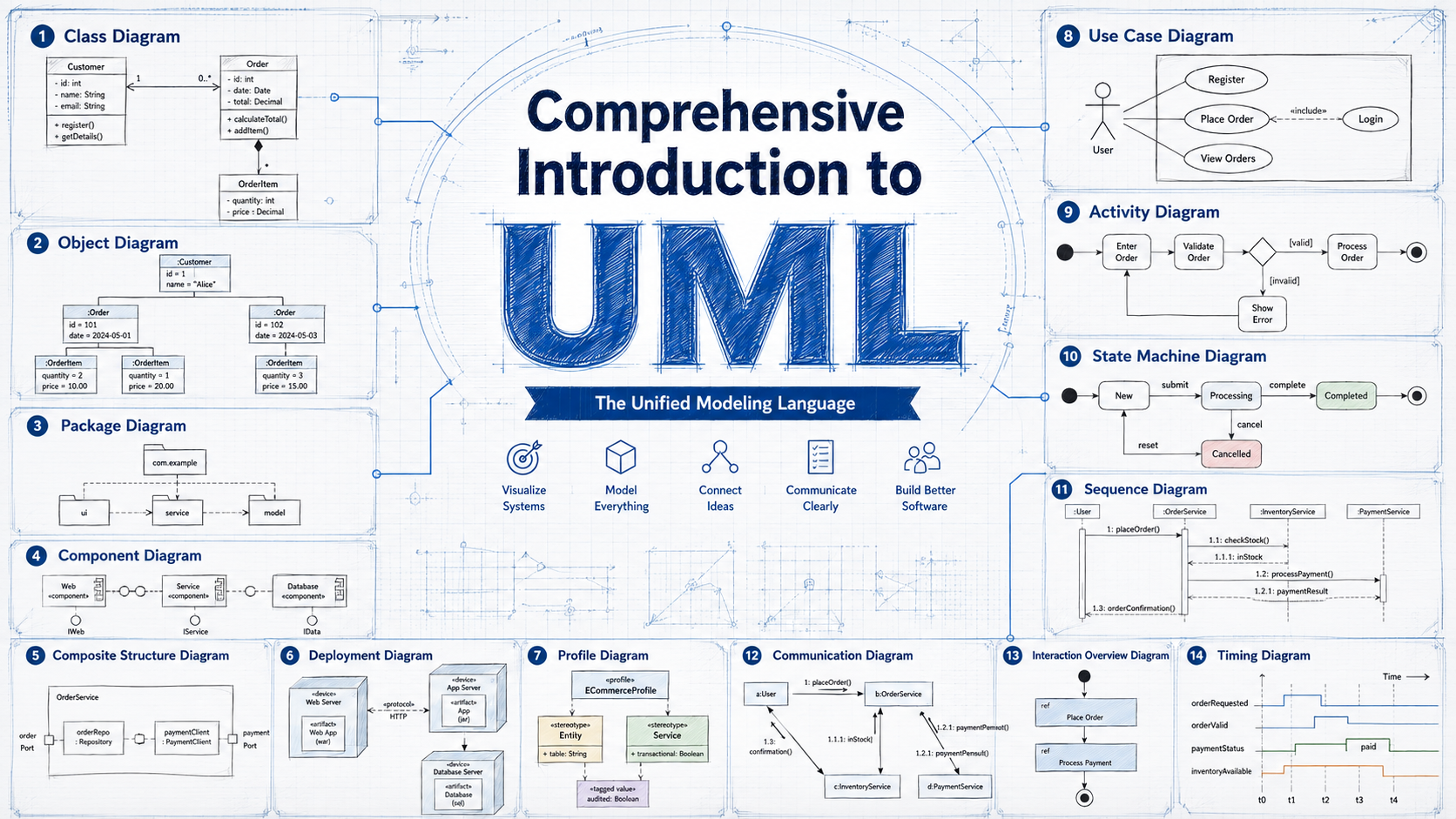
This course serves as a comprehensive introduction to the Unified Modeling Language (UML), equipping participants with a clear understanding of its concepts and practical applications in software development and how UML can be used in other domains.
The focus of this course is on providing a broad overview of various UML diagrams and their specific roles and purpose and for what problem each of the UML diagrams can bes used.
After this course you will know the different types of UML diagrams and what they can be used for. You will be able to decide which type of diagram is better suited to which problem.
This course is not a complete introduction to UML. There are more advanced courses for this.
Target group
This comprehensive training is designed for anyone who wants to gain a solid understanding of the Unified Modeling Language (UML) and learn how to apply it effectively with Enterprise Architect.
Basic experience with Enterprise Architect is recommende, which can be gained by the Start Modelling with EA course.
For the best learning experience, this course can be complemented by the UML Overview Course (UML in a Nutshell), which provides a high-level introduction to UML and explains the purpose and typical use of each of its 14 diagram types.
Course structure
This basic training is offered as eLearning and can be completed independently of time and location through our learning platform.
The course combines theoretical introductions with practical exercises that help you learn the fundamental operation of Enterprise Architect.
Concise and structured explanations introduce the most important UML concepts, their purpose, and their underlying semantics.
The theoretical sections provide the foundation needed to understand how UML elements and diagrams are used, how they relate to each other, and which modelling concepts are best suited to different situations.
Rather than focusing only on notation, the course also explains the ideas behind the language, helping you build a solid understanding that can be applied consistently in practical modelling tasks.
Practical exercises help you apply the concepts introduced in each chapter and turn theoretical knowledge into hands-on modelling experience.
The exercises are designed to reinforce the learning content, deepen your understanding, and prepare you to transfer what you have learned to your own modelling tasks and projects.
Short quizzes at the end of each chapter help reinforce the key concepts and provide an opportunity to check your understanding of the material.
They are designed to support active recall, highlight topics that may require further review, and give you immediate feedback on your learning progress before moving on to the next section.
Learning Objectives
After completing this course, you will have a solid understanding of the fundamental concepts, semantics, and practical application of UML. You will be able to select appropriate UML diagram types for different modelling tasks and use Enterprise Architect to create clear, structured, and consistent models.
In addition to understanding the notation itself, you will learn how UML concepts relate to each other and how different diagrams can be combined to describe a system, domain, or problem from complementary perspectives.
The objective is not simply to recognize UML symbols, but to develop the modelling skills needed to create meaningful models that communicate structure, behaviour, interactions, and dependencies in a precise and understandable way.
Course Contents
The course focuses on the most important UML diagram types and explains their purpose, core semantics, typical modelling patterns, and practical application in Enterprise Architect.
Use Case Diagrams
Describe what a system provides from the perspective of its users and external actors.
- Actors and Use Cases
- System boundaries
- Associations
- Include and Extend
- Generalization
- Structuring functional requirements
Activity Diagrams
Model workflows, processes and the flow of control or information through a sequence of activities.
- Actions and Activities
- Control Flows and Object Flows
- Decisions and Merges
- Forks and Joins
- Initial and Final Nodes
- Partitions and responsibilities
State Machine Diagrams
Describe how an object or system changes its state in response to events during its lifecycle.
- States
- Transitions
- Events and Triggers
- Guards and Effects
- Entry, Exit and Do Behaviors
- Initial and Final States
Sequence Diagrams
Visualize interactions between participants and show how messages are exchanged over time.
- Lifelines
- Messages
- Synchronous and asynchronous communication
- Execution Specifications
- Combined Fragments
- Interaction scenarios
Class Diagrams
Model the static structure of a domain, system or software design using classifiers and their relationships.
- Classes, Attributes and Operations
- Associations
- Multiplicity
- Navigability
- Aggregation and Composition
- Generalization and Interfaces
Object Diagrams
Show concrete instances of model elements and illustrate a specific configuration or snapshot of the model at runtime.
Deployment Diagrams
Describe the physical or technical environment in which software and system components are deployed and executed.
- Nodes and Devices
- Execution Environments
- Artifacts
- Deployment relationships
- Communication Paths
- Runtime and infrastructure configurations
A central concept: UML is a General-Purpose Modelling Language
UML has its roots in object-oriented software modelling, but it is not limited to software development.
As a general-purpose modelling language, UML provides a rich set of concepts for describing structure, behaviour, interactions, responsibilities and relationships. These concepts can be applied to many different domains — from software and systems engineering to business, processes, organisations, products and other complex subject areas.
The key is to understand the semantics behind the language. Once these concepts are understood, UML can be used far beyond its original software-oriented context to create precise, consistent and meaningful models for a wide variety of purposes.
Prerequisites
No prior UML knowledge is required.
A basic understanding of software, systems, or structured problem solving is helpful, but not essential. The course introduces the relevant concepts from the ground up and is designed to provide a solid and comprehensive foundation for participants with different backgrounds.
Only a basic familiarity with Enterprise Architect is helpful. The UML concepts themselves are explained in detail in the How to do it in EA sections, including how they are represented and applied in the tool. Therefore, prior knowledge of UML-specific functionality in Enterprise Architect is not required.
Technical requirements
Information about hardware, software, supported Enterprise Architect versions, licenses and the Moodle learning platform is available on our technical requirements page.
View technical requirements →Ready to start modelling with UML?
This course gives you the practical foundation you need to understand and apply UML confidently in Enterprise Architect.
You will learn how to use the most important UML concepts and diagrams, how to model them effectively in Enterprise Architect, and how to build clear, consistent models that can be reused and extended for different purposes and domains.
- Teacher: Oliver Alt
- Teacher: Phillip Chudley
- Teacher: Bianca Pilz
|
|
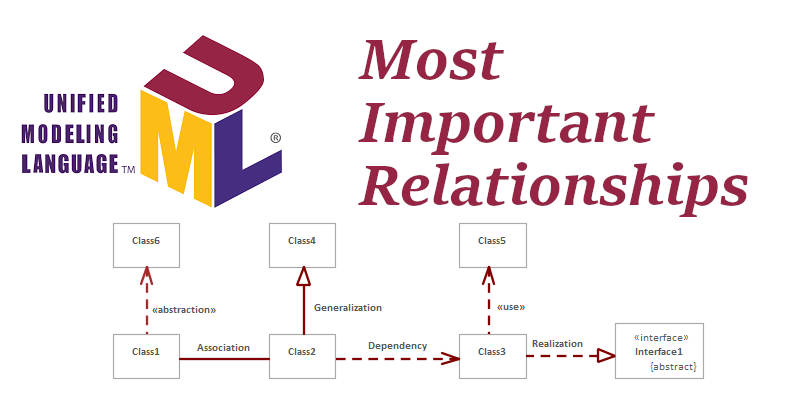
In this course you will learn about the most important UML connectors and what they can be used for.

How to add a diagram, element, copy an element, etc.
With diagram specific handlings as shown in trainings.
- Teacher: Thomas Besorna
- Teacher: Dr. Horst Kargl
- Teacher: DI Franz Ewald Müller
- Teacher: Evamaria Posch